



Standard OSD Marker Plates and Signage Council Requirements
On-site stormwater detention systems, commonly referred to as OSD systems, temporarily store stormwater and control the rate at which it is discharged from a property.
Depending on the approved stormwater design, development consent and local council requirements, an OSD installation may require a permanent OSD marker plate, an above-ground detention warning sign and, where applicable, confined-space warning signage.
Important: OSD signage requirements are not identical across every NSW council. Before ordering, check the approved hydraulic drawings, development consent, Construction Certificate conditions, positive covenant and the relevant council stormwater requirements.
Need OSD signage for a project?
Order our standard OSD signs online or send us your council requirements, approved drawing or required wording for a custom quotation.
OSD Signage Checklist
| Sign type | Typical purpose | What to confirm |
|---|---|---|
| OSD marker plate | Identifies the permanent stormwater detention system and warns against altering it. | Required size, material, wording, council name and mounting location. |
| Detention-area warning sign | Warns that stormwater may rise within an above-ground detention area during heavy rain. | Quantity, visibility, location and wording shown on the approved plans. |
| Confined-space sign | Warns against unauthorised entry into a tank, pit or storage area identified as a confined space. | Confined-space assessment, access points, wording and site safety procedures. |
1. OSD Marker Plate Requirements
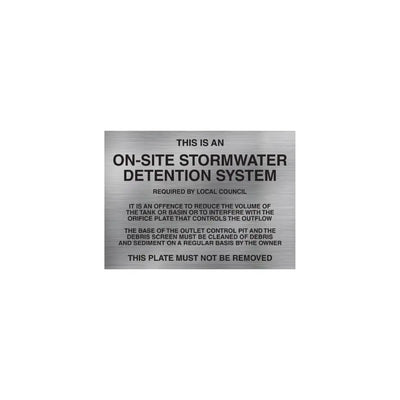
A permanent marker plate may be required to identify the location and purpose of an on-site stormwater detention system. It also warns owners, residents, maintenance contractors and future property managers that the storage volume and outlet-control components must not be altered.
Depending on the council and project conditions, the plate may need to be fixed near the discharge-control pit, detention tank or basin on a durable and permanent surface.
Details to confirm before ordering
- The minimum plate dimensions required by the relevant council
- Whether the plate must name the local council
- The exact wording shown in the approved documents
- The required material and thickness
- Minimum letter height and legibility requirements
- The fixing method and approved mounting location
- Whether more than one marker plate is required
Do all NSW councils require the same plate?
No. Some councils specify a different minimum size, material, wording or mounting position. Where the approved requirement differs from our standard plate, we can quote on a custom size or customised wording.
Common OSD marker-plate wording
The following is an example of wording commonly requested for an OSD marker plate. Always compare it with the exact wording required for your project.
THIS IS AN
ON-SITE STORMWATER
DETENTION SYSTEM
REQUIRED BY LOCAL COUNCIL
IT IS AN OFFENCE TO REDUCE THE VOLUME OF THE TANK OR BASIN OR TO INTERFERE WITH THE ORIFICE PLATE THAT CONTROLS THE OUTFLOW.
THE BASE OF THE OUTLET CONTROL PIT AND THE DEBRIS SCREEN MUST BE CLEANED OF DEBRIS AND SEDIMENT ON A REGULAR BASIS BY THE OWNER.
THIS PLATE MUST NOT BE REMOVED
Our Standard OSD Marker Plate
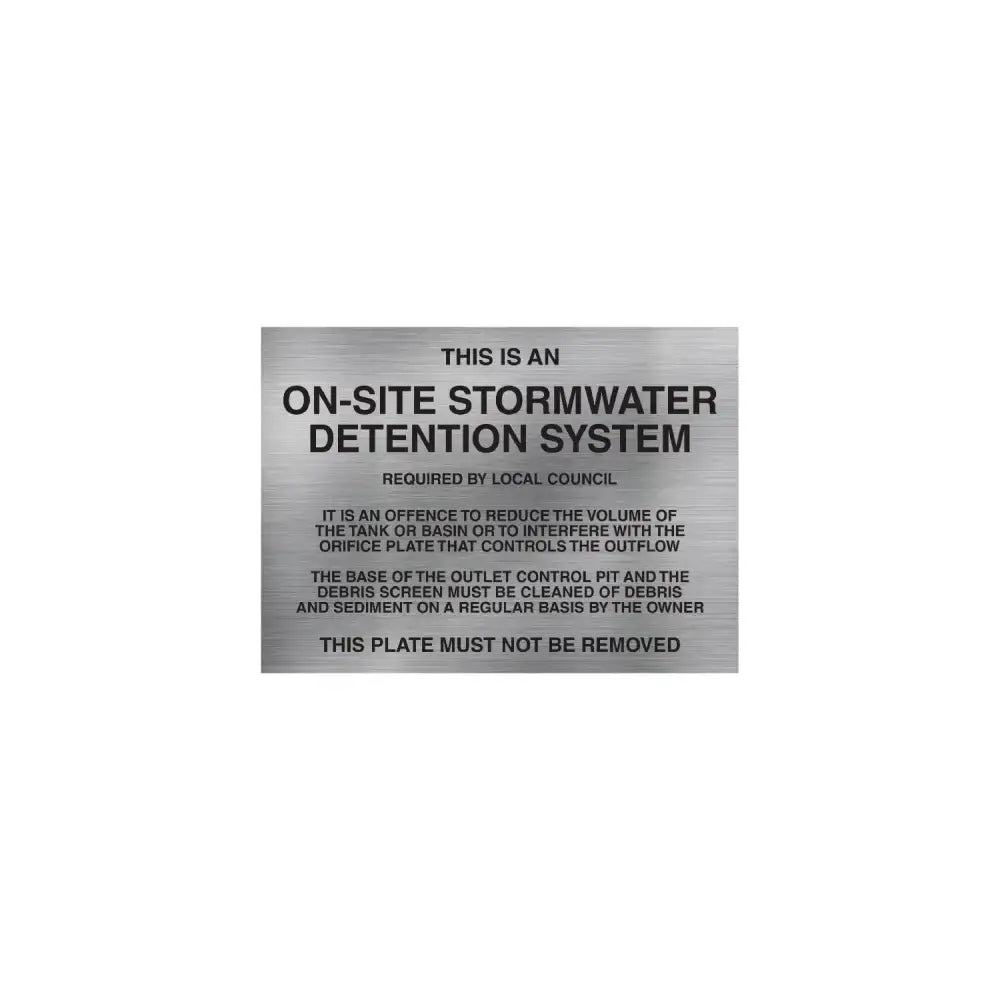
Standard OSD Marker Plate
- Size: 110mm × 80mm
- Material: 1mm aluminium
- Finish: Etched and black-filled text on a natural silver background
- Application: Permanent identification of an OSD system where this specification is accepted
Check that this size and wording match the requirements for your site. Custom sizes and wording can be quoted where required.
2. Above-Ground OSD Detention-Area Warning Signs
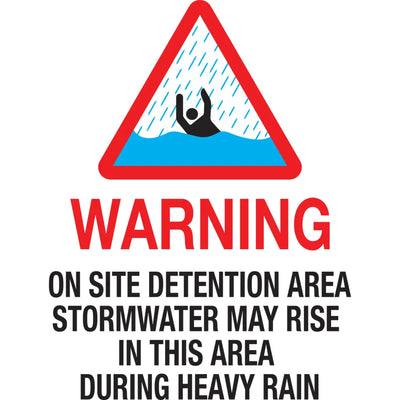
An above-ground detention area may temporarily fill with stormwater during heavy rain. Where required by the approved plans or council conditions, a warning sign should be installed in a clearly visible position to alert residents, visitors and maintenance personnel.
The sign normally warns that the area forms part of an on-site detention system and that stormwater may rise during heavy rainfall.
Check the following
- The sign wording shown on the approved stormwater drawings
- The number of signs required around the detention area
- Whether the sign remains visible when the area is in use
- The required size and sign material
- Whether the sign will be exposed to weather or direct sunlight
- The permanent fixing method
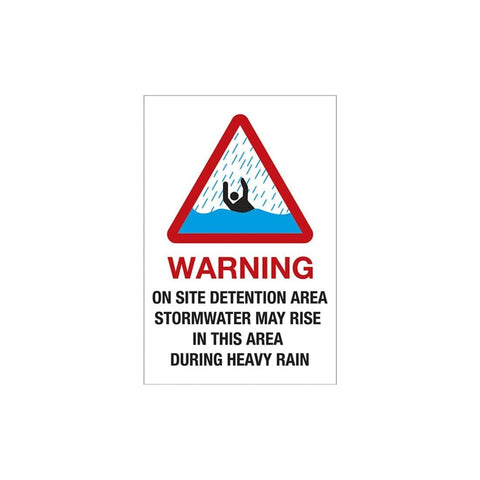
Warning: On-Site Detention Area
Designed to identify an above-ground stormwater detention area and warn that water may rise in the area during heavy rain.
3. Confined-Space Signs for OSD Tanks and Pits
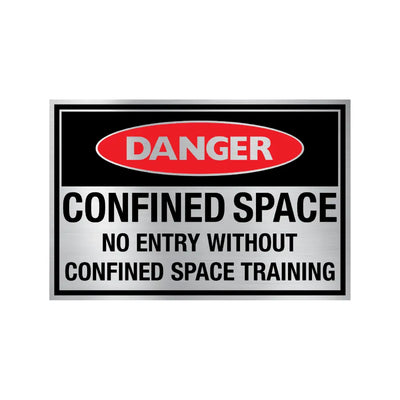
Some OSD tanks, pump-out storage tanks, pits and underground structures may meet the definition of a confined space because of their design and the hazards that may be present.
Where an area has been assessed or identified as a confined space, suitable controls may include warning signage, restricted access, barriers, locks, entry procedures, permits, training and emergency arrangements.
Safety note: A warning sign by itself does not make confined-space entry safe. Entry and work must be managed under the applicable workplace procedures, risk controls and legal requirements.
Before ordering confined-space signage
- Confirm that the tank, pit or storage area is classified as a confined space
- Identify every point where inadvertent or unauthorised entry is possible
- Check the wording required by the site safety documentation
- Confirm whether additional danger, permit-entry or authorised-entry wording is needed
- Select a material suitable for the location and environment
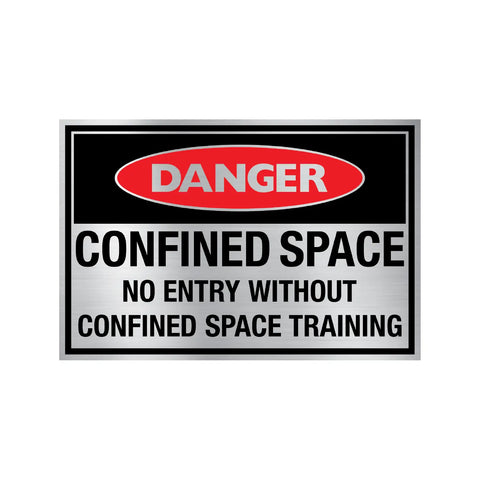
Danger: Confined Space Sign
Suitable for access points where the site assessment and safety procedures require a confined-space danger warning.
Information to Check Before Ordering OSD Signage
To avoid ordering a plate or sign that does not match the approved requirements, review the following information first:
- Local council: Identify the council responsible for the development.
- Approved drawings: Check the hydraulic and stormwater drawings for sign notes and details.
- Consent conditions: Review the Development Application, Construction Certificate and Occupation Certificate conditions.
- Exact wording: Confirm whether the council name, property details or project-specific wording must appear.
- Size and material: Check the specified dimensions, thickness and material.
- Quantity: Count each detention area, access point, pit, tank and required mounting location.
- Fixing location: Confirm the sign will be fixed to a durable permanent surface and remain visible.
Standard and Custom OSD Signage
Statutory Signs supplies standard OSD marker plates, detention-area warning signs and confined-space safety signs. We can also produce customised plates where a council or approved project drawing specifies a different:
- Plate size
- Council name
- Warning message
- Material or thickness
- Hole position or fixing method
- Property or system identification
Need the correct OSD signs for your project?
Send us the approved sign detail, stormwater drawing or council wording. We can confirm whether a standard product is suitable or prepare a custom quotation.